An Afternoon in Khan Market
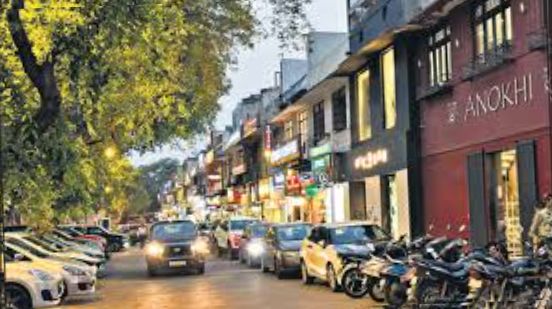
Delhi, with all its chaos and contradictions, finds a curious balance in Khan Market. Step out of the Metro at Khan Market station, and it feels like you’ve entered a world within a city—a place that has learned to mix the old with the global, the noisy with the intimate. Named after Khan Abdul Jabbar Khan, a Pashtun leader and brother of Frontier Gandhi, the market was originally meant for refugees after Partition in 1951. Today, it is one of the most expensive retail stretches in the world, rubbing shoulders with the likes of London’s Covent Garden and New York’s SoHo. On this particular afternoon, I slipped past the honking cars and the jostling rickshaws into the narrow, horseshoe-shaped lanes. The smell of freshly brewed cappuccinos floated from cafés like Café Turtle and Blue Tokai, while just a turn away, the smoky aroma of kebabs from Khan Chacha wrapped itself around me. A paradox of Delhi life played out before my eyes: suits and ties ducking into sleek foreign boutiques, while college students bargained for cheap trinkets at roadside stalls. The bookstores here are treasure troves—Bahrisons, an institution since 1953, where the scent of paper carries stories from every corner of the globe. Just across, the modern glass windows of Good Earth gleam with luxury homeware. I walked on, watching how foreign brands—Nike, L’Occitane, even quirky European bistros—blend seamlessly with Delhi’s age-old love for samosas, jalebis, and paan. What makes Khan Market more than just a marketplace is its rhythm. The afternoons belong to ladies who lunch, diplomats from embassies tucked nearby, and expats sipping iced lattes while typing on MacBooks. By evening, the young crowd takes over, filling bars and rooftops with laughter and clinking glasses. It is not rare to overhear three languages in a single turn—Hindi, English, French—proof of Delhi’s layered cosmopolitanism. Interesting trivia reveals itself like hidden gems. Few know that Khan Market was once a modest cluster of small shops rented to refugees for just Rs. 20 a month. Fewer still realize that its real estate today competes with the Champs-Élysées in price. Or that famous Delhi families have had their presence here for generations, turning everyday grocery shopping into a cultural ritual. My afternoon found its charm in a simple moment: sipping masala chai at a corner tea stall while watching an elegant foreign couple step out of an Audi and head straight to a street vendor selling juttis. This is Khan Market’s magic—the ability to let Louis Vuitton and local leather coexist without one overshadowing the other. As the sun dipped, the lights strung across cafés began to glow, and the voices in the market rose like a chorus. I left with the feeling that Khan Market is not just a shopping hub. It is Delhi’s performance stage, where cultures meet, where history holds hands with modernity, and where every afternoon tells a new story in the language of people, food, and timeless bustle.
Wordsmith: Arnab Kumar Bose (The Solitary Reaper)
9/14/20251 min read